Ghost Shark and the Undersea Autonomy Race
Australia’s Ghost Shark is less a one-off drone story than a test of whether allied navies can build undersea mass fast enough to matter before the submarine timelines catch up.

TL;DR
Ghost Shark shows that Australia is trying to turn undersea autonomy from a lab exercise into a real force-structure bridge while crewed submarine programs remain slow and scarce.
The important shift is not just the vehicle. It is the compressed path from concept to prototype to production readiness, backed by a sovereign supply chain and allied testing.
If that model holds up in contested conditions, the undersea autonomy race will be decided as much by manufacturability and fielding speed as by exquisite platform performance.
The Bridge Before SSN-AUKUS
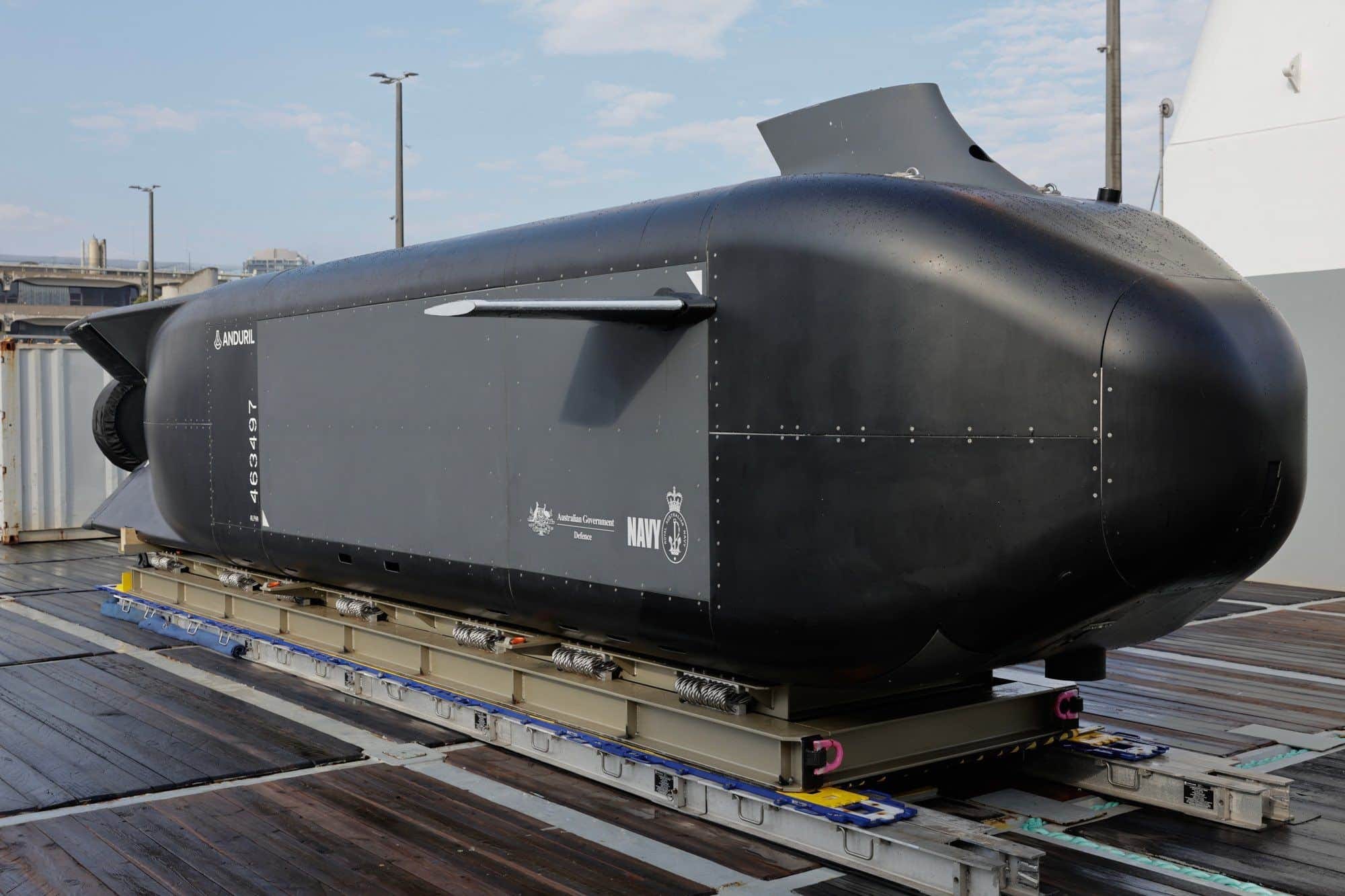
Australia’s Ghost Shark program is easy to misread as another futuristic autonomy headline. It is more important than that. The real question is whether middle powers can build useful undersea deterrence without waiting for the timelines of traditional submarines.
That problem is acute for Australia. The Royal Australian Navy has to cover vast maritime approaches with a small submarine force, while the SSN-AUKUS pathway unfolds on a far longer clock. Canberra’s 2024 National Defence Strategy responded by pushing a strategy of denial, larger subsea investment, and a broader turn toward autonomous and uncrewed systems. Ghost Shark sits directly inside that shift. (Australian Defence) (Minister for Defence Industry)
The official framing is unusually explicit. The government says Ghost Shark will give Navy a stealthy, long-range autonomous undersea warfare capability for persistent intelligence, surveillance, reconnaissance, and strike. That alone marks a change. Extra-large autonomous underwater vehicles were often discussed as experimental adjuncts. Ghost Shark is being described as an operational capability pathway, and one linked to Australia’s highest-priority innovation channel through ASCA Mission Zero. (Minister for Defence Industry)
The timing matters as much as the mission set. Pat Conroy said the first prototype was delivered one year early and on budget after a co-development effort that began in 2022, with all three prototypes due by June 2025 and a first production variant targeted by the end of 2025 if performance targets hold. That is not normal undersea acquisition cadence. It is an attempt to inject software-era iteration into one of the slowest corners of military procurement. (Minister for Defence Industry Transcript)
From Demonstrator to Force Structure
The biggest change is not that Australia now has an XL-AUV prototype. It is that Ghost Shark has been built as an industrial and operational system from the start. The April 2024 rollout and August 2024 production-readiness contract show a deliberate move from demonstration to manufacturing base. Defence and Anduril each committed A$20.1 million in additional early-works funding to scale the sovereign supply chain and build infrastructure for production. The first production variant was publicly targeted for the end of 2025. (Minister for Defence Industry)
That production emphasis is central to the program’s logic. Chief Defence Scientist Tanya Monro said Ghost Shark was designed for manufacturability, mass production, and flexibility. Anduril says more than 42 Australian companies are involved in the supply chain, and the company’s Australian factory is intended to produce large numbers of Ghost Sharks for the RAN and partner markets, alongside a commercial Dive-XL variant. (Anduril) (Naval News)
That is the part that changes the strategic picture. Undersea deterrence has usually been tied to expensive, scarce, crewed platforms. Ghost Shark points toward a different model: a lower-cost autonomous vehicle built for persistence, modular payloads, and employment in places where commanders may not want to send a submarine with a crew aboard. But manufacturability is only strategically meaningful if the vehicle can also prove reliable enough in contested conditions to earn operational trust. Naval News reported that Ghost Shark draws from Anduril’s Dive-LD lineage and associated autonomy stack, while official and company descriptions repeatedly stress payload flexibility, long-range ISR, and strike potential rather than a single fixed mission. (Naval News) (Anduril)
The allied angle is also widening. One Ghost Shark was flown to the United States by RAAF C-17 in 2024 to expand the test envelope on both sides of the Pacific and enable collaboration with U.S. government partners around RIMPAC. That matters because it treats Ghost Shark not as an isolated national prototype but as part of a wider allied experimentation pipeline. (Anduril) (Naval News)
This fits a larger pattern in allied autonomy. AUKUS Pillar II formally includes undersea robotics, AI, and autonomy as near-term workstreams, and trilateral testing has already covered trusted robotic operations in contested environments. The TORVICE trial in South Australia, for example, stress-tested autonomous systems against electronic warfare and navigation attacks. That trial focused on robotic vehicles more broadly, not Ghost Shark specifically, but it highlights the operational problem set any serious autonomous force will face. At the same time, specialist analysts remain blunt that Pillar II still lacks clean budgets, milestones, and acquisition pathways. (U.S. Department of Defense) (ASPI) (War on the Rocks)
Strategic Implications
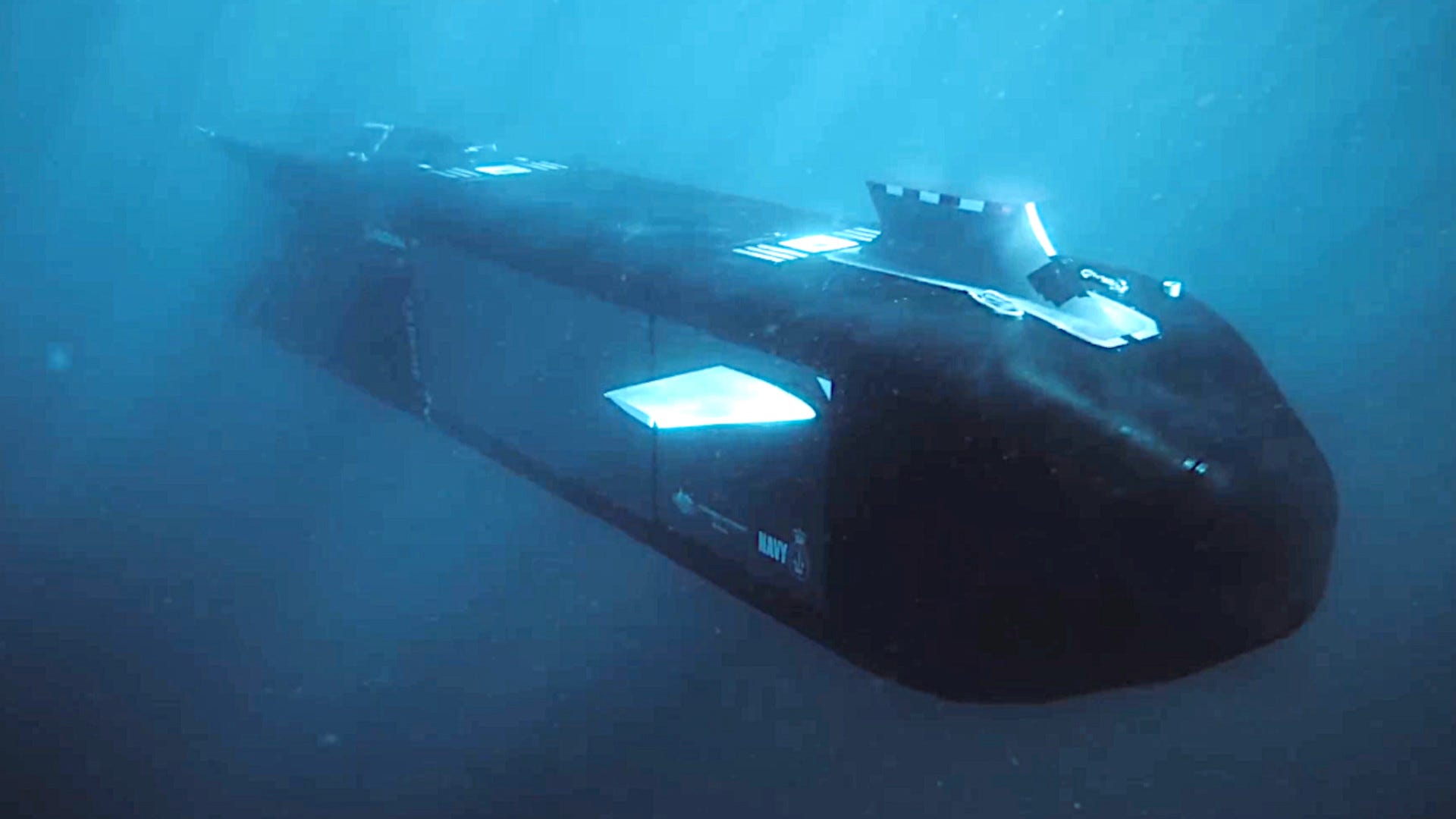
Ghost Shark’s strategic value lies in what it could let Australia do before its submarine recapitalization arrives. A stealthy long-range autonomous undersea vehicle can thicken surveillance, extend targeting reach, place sensors or payloads in dangerous waters, and complicate an adversary’s planning without consuming one of the navy’s few crewed submarines. In an Indo-Pacific archipelagic environment, that kind of persistent, distributed presence has real deterrent value. (Minister for Defence Industry)
Just as important, Ghost Shark hints at a new measure of undersea power. The old benchmark centered on platform exquisiteness: how quiet, deep-diving, or lethal a single submarine could be. The new benchmark may be how quickly a navy can field enough autonomous systems, keep upgrading them, and integrate them with crewed fleets and allied networks. In that competition, manufacturability, software iteration, and distributed supply chains matter almost as much as raw platform performance.
That does not mean Ghost Shark has already delivered true undersea mass. Quantities remain undisclosed, the command-and-control concept is opaque, and undersea autonomy still runs into severe communications limits and uncertain reliability in contested acoustic and electromagnetic conditions. Australia has disclosed little about basing or exact concepts of employment. That leaves open the possibility that Ghost Shark becomes a useful niche asset rather than the start of a large operational fleet.
There is also a deterrence ambiguity problem. A system described as flexible across ISR and strike missions can be stabilizing if it improves maritime awareness and disperses risk. It can also be destabilizing if adversaries cannot tell whether a vehicle is sensing, laying effects, delivering payloads, or cueing weapons. Undersea systems already operate in a domain where attribution is difficult and warning time is thin. More autonomous presence could sharpen that uncertainty.
The program’s broader lesson is still clear. Ghost Shark suggests the undersea autonomy race is moving out of its experimental phase. The central issue is no longer whether navies want large autonomous underwater vehicles. It is whether they can build enough of them, integrate them fast enough, and trust them enough for real operations. Australia is trying to answer yes years before its most important crewed undersea investments arrive. If that works, Ghost Shark will matter less as a single platform than as a template for allied undersea force design.